P-01 · How I built it
NextPick
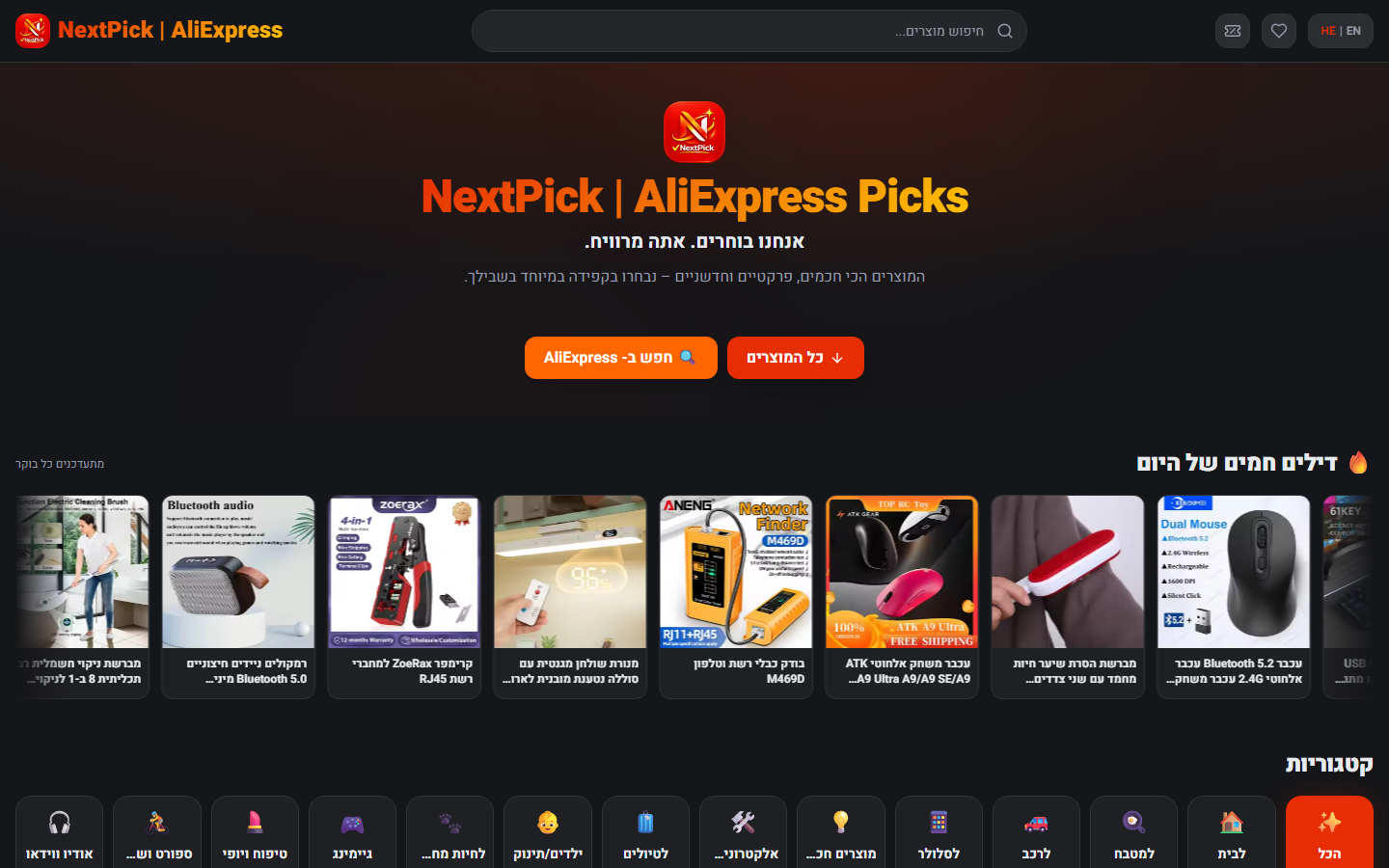
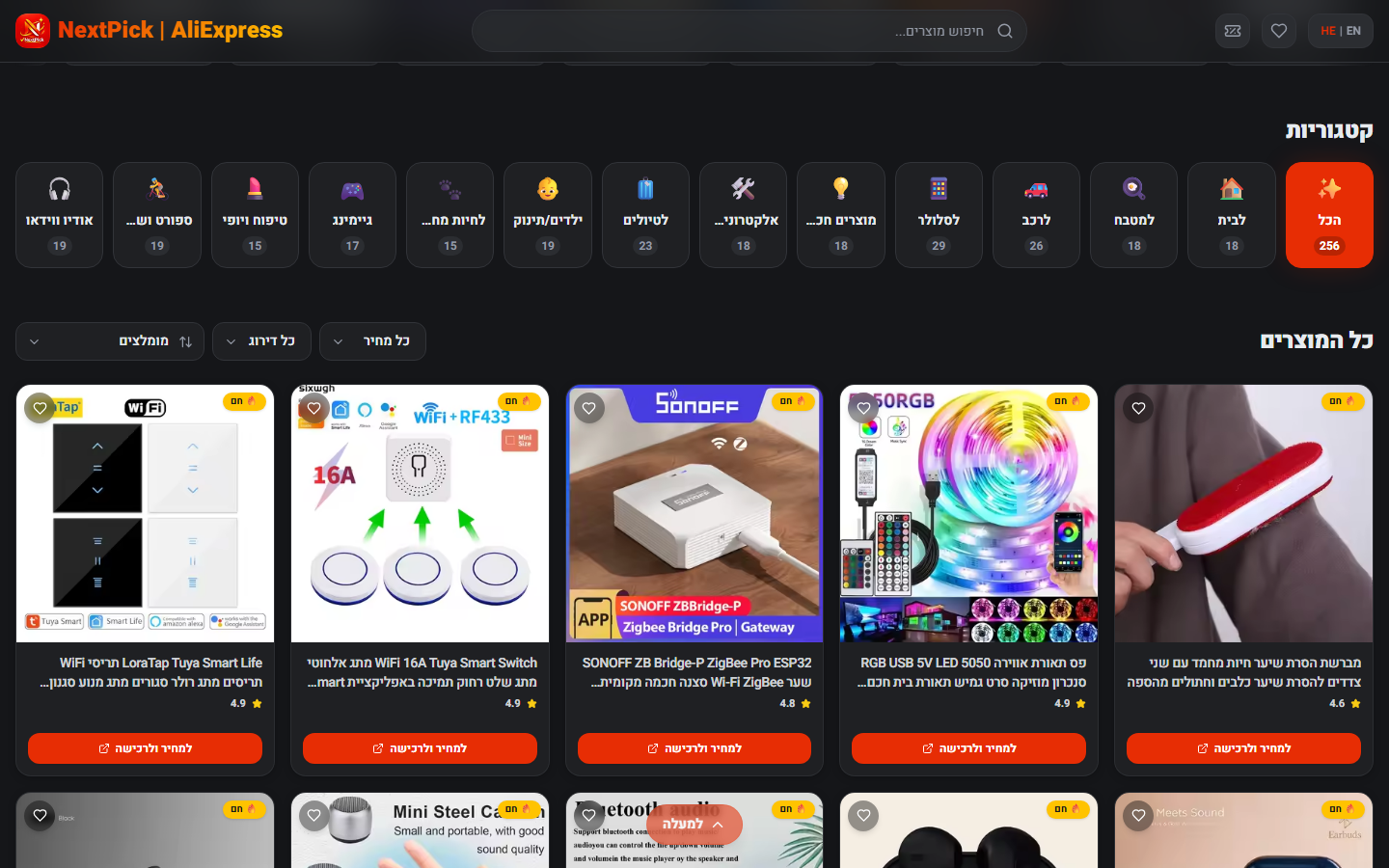
NextPick is a small shopping site in Hebrew and English at nextpick.orel-tal.com. It shows about 250 hand-picked AliExpress products across a dozen categories, and only products with high ratings and lots of real orders.
Visit nextpick.orel-tal.com(opens in a new tab)Why I built it
I built it because I wanted one calm place to find things that are actually worth buying, without digging through thousands of near-identical listings.
When someone buys through a link on the site, I may earn a small commission, and the site says so.
Screens
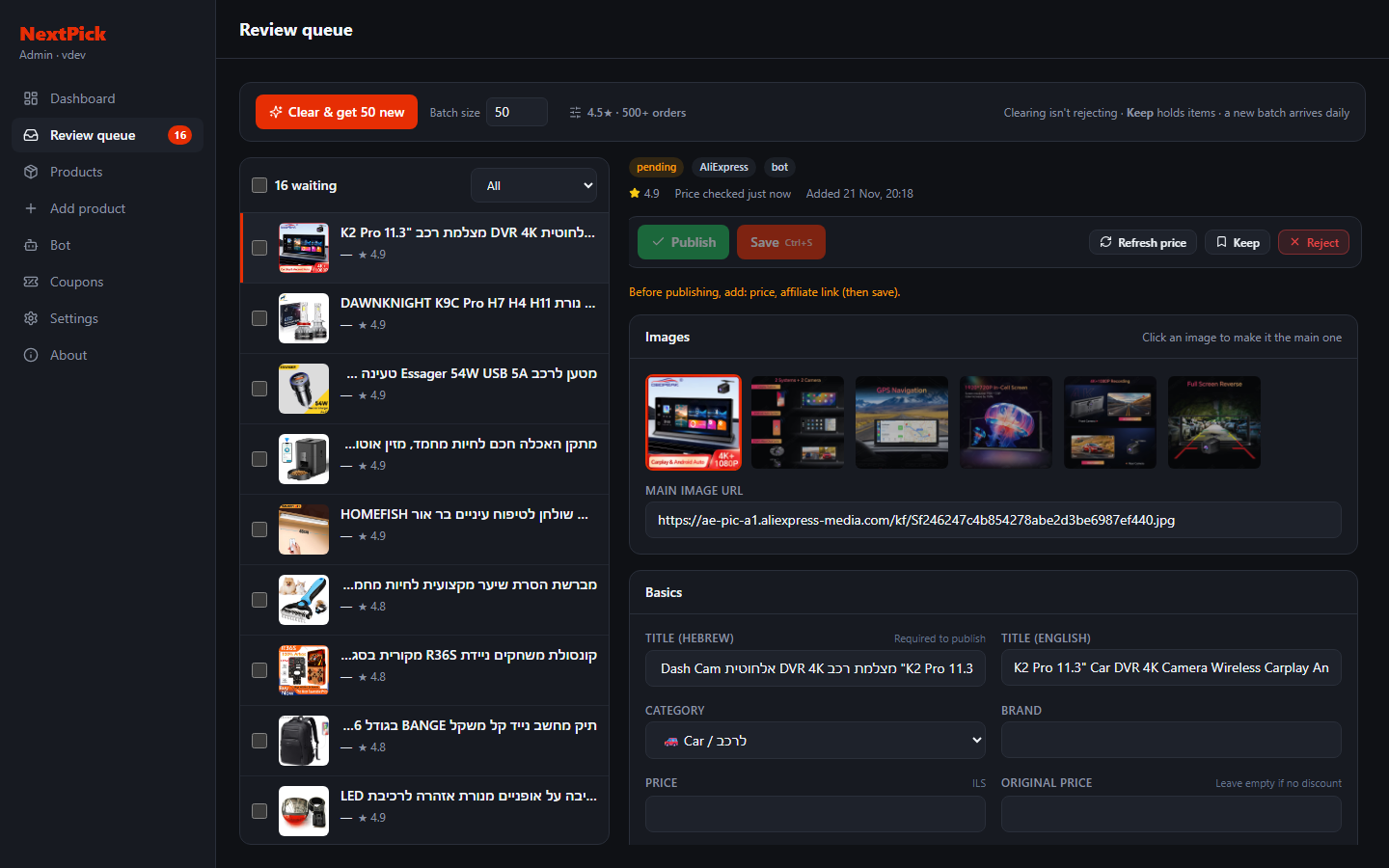
Screenshots are from a local test copy, with prices and links removed.

Hard moments
Everything stopped, and it wasn’t my code
- What I wanted
- Keep prices and orders on the site up to date from the AliExpress affiliate service.
- Where it got stuck
- One morning every request to the service started failing. Prices froze at the previous day’s values, and the errors said things like “System Error” and “This publisher is not registered”. The links already on the site kept working, so visitors saw nothing wrong, but nothing new could come in. Nothing in my code had changed that day.
- What fixed it
- The cause was on the account side, not in the code: two of my AliExpress accounts that have to match no longer did, and a profile check had quietly failed. Once the accounts matched again and the check went through, the connection worked again.
- What I learned
- When everything breaks at the same moment, ask first what changed that day, and check the accounts before the code. And keep the old links working while you sort it out, so visitors never notice.
Visitors saw half the old site and half the new one
- What I wanted
- Release an update so that everyone gets the new version.
- Where it got stuck
- After a release, some people still saw the old site, and some saw a strange mix of old and new. It looked fine on my side, which made it hard to track down.
- What didn’t work
- Telling the server to keep files for a shorter time. A caching layer in front of the site was holding its own copy of one small background script for hours, and it ignored that setting.
- What fixed it
- I removed that background script completely and sent the remaining small files with a “never cache this” instruction, which that layer does respect. Releases now show up straight away.
- What I learned
- Caches stack on top of each other, and each layer has its own rules. Test through the public address, not only on your own computer.
The feature I built and then deleted
- What I wanted
- Give every product a good description, because AliExpress titles are long and messy.
- Where it got stuck
- I built a feature that asked an AI service to write the descriptions. It worked, but it needed prepaid credits, and I didn’t want to publish text that nobody had checked.
- What didn’t work
- The idea itself. Paying per product for generated text didn’t feel right for a small site, and neither did invented wording next to real products.
- What fixed it
- I removed it. Products now show exactly what the AliExpress listing gives, and any description is one I write myself.
- What I learned
- It’s fine to build something and throw it away. Real data from the listing beats clever text that nobody checked.
The pictures were too heavy, and my first fix did nothing
- What I wanted
- Make the site feel quick on a phone.
- Where it got stuck
- The page itself loaded fast, but every product picture was downloaded at full size. The average picture was around 85 KB, and some were close to 900 KB.
- What didn’t work
- AliExpress’s picture server can return smaller versions if you add a size to the address, so I asked for 400-pixel pictures. The site looked the same, and the files were still full size. I only noticed because I measured the real file sizes instead of trusting the page.
- What fixed it
- The server only resizes to a fixed list of sizes: 350 and 480 work, 400 and 450 don’t. I now ask only for sizes that work. The average picture dropped from about 85 KB to about 12 KB, roughly 85% less data, and the page looks the same.
- What I learned
- Measure the real result. A change that “looks the same” can also be a change that did nothing.
Product names that read like keyword lists
- What I wanted
- Show clean, readable names instead of AliExpress’s long keyword lists.
- Where it got stuck
- My first automatic shortener made about half of the names worse, so I dropped it.
- What fixed it
- A second try with a different rule: only change what visitors see, never the title stored in the database; leave short, clean names exactly as they are; and cut at natural breaks. I ran it on every real title in the catalog and read the results before releasing it. The original title is always still there.
- What I learned
- When an automatic change might go wrong, make it reversible and test it on real data first.
What it’s made of
- The website
- React with TypeScript and Tailwind, in Hebrew and English.
- The server
- Node.js with Express and a SQLite database. One small program serves the public site, another the admin side, and a third runs the scheduled background work.
- The bot
- A scheduled job that searches AliExpress every night, filters by rating and orders, and can publish a few of the best products by itself under strict rules. A weekly clean-up takes down products that disappeared or lost their rating.
- The admin app
- First a desktop app (Electron), now a phone-friendly web app for reviewing suggestions and watching the bot.
- Releases
- Every release makes a backup first and rolls back by itself if something fails. A few hundred automatic checks run before each one.